Zcash developer Zakura has proposed a new privacy measure for swaps routed through Near Intents, designed to prevent a single publicly exposed refund address from revealing a user’s wider transaction history if quantum computers eventually become capable of breaking current cryptography.
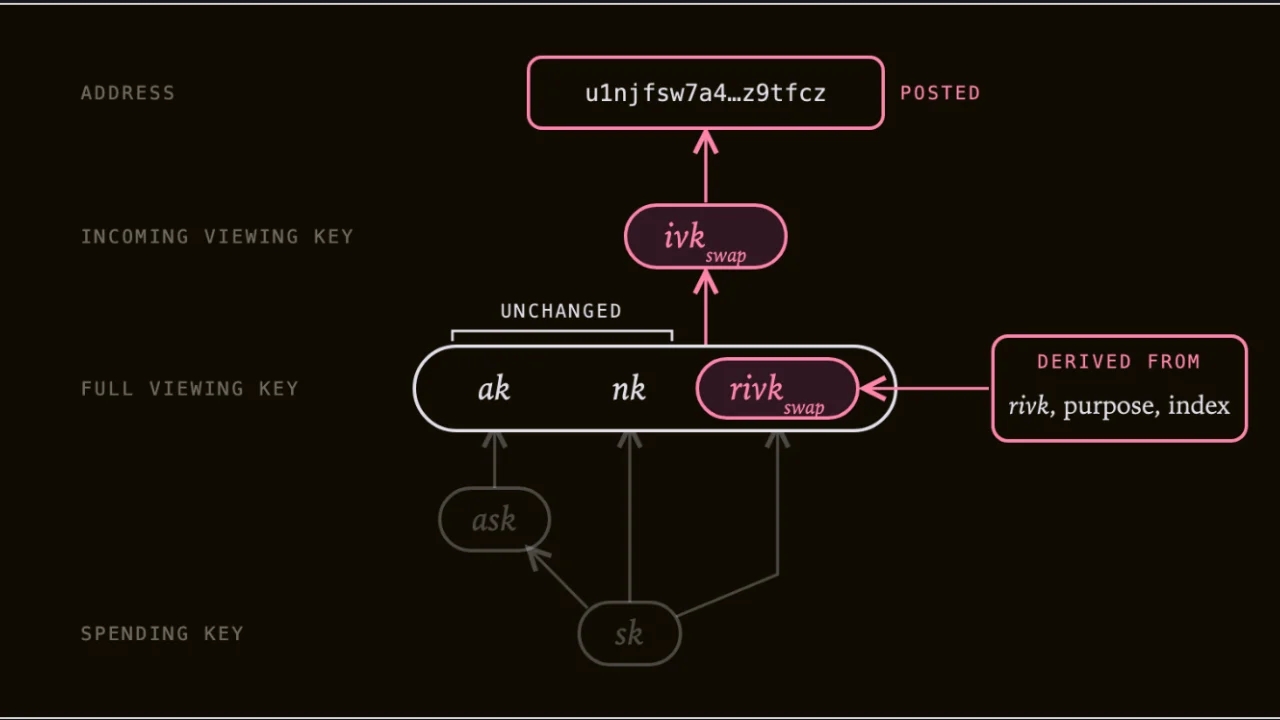
Quantum computers do not currently threaten Zcash. However, the Zcash infrastructure team is preparing for that possibility by proposing a one-time incoming viewing key for every ZEC swap conducted through Near Intents.
The proposal addresses a privacy weakness created when shielded Zcash addresses are permanently published on Near’s public blockchain. At present, several diversified Zcash addresses may use the same underlying incoming viewing key.
If a sufficiently powerful quantum computer used Shor’s algorithm to recover that key from a public address, it could theoretically connect payments received across the same account. Zakura’s design would restrict the potential exposure to an individual transaction.
Each cross-chain swap would receive its own incoming viewing key and refund address. If quantum technology eventually enabled an attacker to compromise one of those publicly posted addresses, the attacker would be able to identify payments linked to that swap only, rather than access the account’s broader payment history.
The spending key would remain unchanged. Funds received through the one-time address could still be spent from the user’s existing account, avoiding the less practical alternative of creating a separate Zcash account for every transaction.
That is particularly relevant to software and hardware wallets, where distributing funds among a large number of accounts could make them significantly harder to use.
Recovery challenge
Generating a new viewing key for every swap would create a separate problem when a wallet is restored. Without another solution, the wallet would need to scan the Zcash blockchain repeatedly with every swap key previously created.
Zakura’s proposal uses private information retrieval (PIR) to address that issue. Public filters would first indicate whether a refund address had received funds. Encrypted queries would then allow the wallet to find the relevant transaction without revealing to the server which address was being checked.
Compatible software wallets using Zakura’s open-source libraries could add the feature within weeks, while support for hardware wallets is expected at a later stage.
The proposal comes as cross-chain activity involving ZEC demonstrates that the issue is not merely theoretical. In September, Aurora Intents processed more than $19 million through 1,718 swaps for a zcash-denominated zkSNARKs auction.
That level of activity highlights the privacy implications of permanently publishing addresses before quantum computers become capable of exploiting them.
Zcash developers are also working on the broader NU7 network upgrade. However, the currently proposed NU7 changes do not amount to a complete post-quantum migration.
The proposal reflects a wider shift in crypto security planning, with teams increasingly seeking to address quantum risks before the first practical attack takes place.


