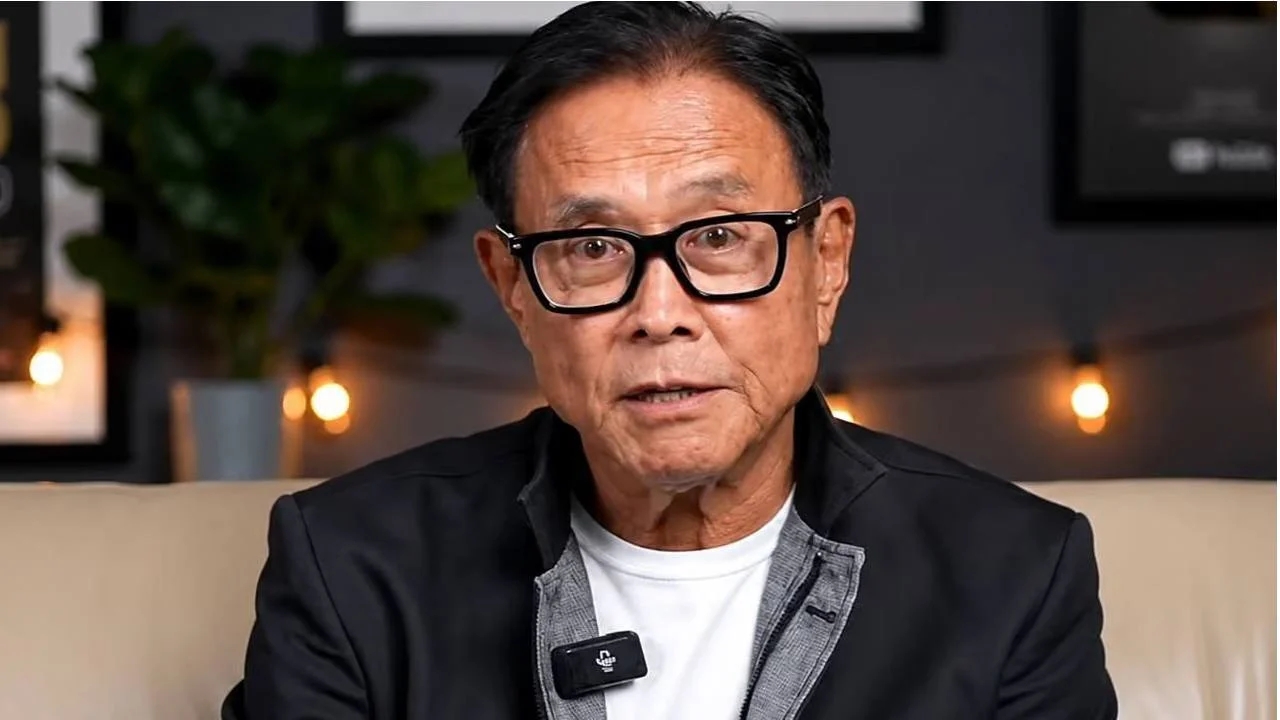
Robert Kiyosaki, author of Rich Dad Poor Dad, says losing everything helped him develop better financial judgement, provided mistakes were treated as lessons rather than reasons for lasting bitterness.
In a statement on X on 16 October, Kiyosaki said his “rich dad” taught him to learn from setbacks and become more financially intelligent instead of allowing failure to make him resentful. He presented recognising mistakes and changing as the key to gaining from financial loss.
Kiyosaki also criticised the education system, arguing that schools often punish mistakes rather than teach people how to analyse them. He said fear of making errors, or failing to learn from earlier decisions, could contribute to poverty.
“Humans were designed to make mistakes, learn, and grow smarter,” he added.
In a separate five-part list of financial difficulties, also published on 16 October, Kiyosaki said everyone faced money problems. He identified those problems as having no money, earning too little, spending more than one earns, failing to put money aside for the future, and having too much money.
He argued that dealing with the first four challenges had taught him valuable lessons, leaving him with what he described as a different kind of problem: possessing too much money.
Kiyosaki then added a sixth difficulty moving from sudden wealth to having nothing. He linked that outcome to inflated egos or dishonest people gaining access to a person’s assets. Professional athletes, movie stars, lottery winners and people who receive inheritances were among those he cited as vulnerable.
He said dishonest behaviour could come from managers, accountants, attorneys or relatives.
Kiyosaki said he created the Cashflow board game with Kim Kiyosaki to allow people to practise financial decisions using play money. Players buy assets, assess investment opportunities and see how their choices affect their position.
His concluding advice was: “Make mistakes, learn, grow, and enjoy a richer life.”
His approach to rebuilding after financial loss starts with improving financial knowledge before risking more money. In July, while discussing a hypothetical $10,000 rebuilding plan, he placed financial education, mentorship and income-producing skills ahead of buying investments.
He has also warned that older savers may have less time to recover from major losses before retirement. In an X post on 27 September, Kiyosaki predicted that severe falls in stocks and bonds could leave some baby boomers without enough time to rebuild their savings.
On 3 October, he compared preparing for economic trouble with carrying car insurance. He outlined a financial preparedness strategy while repeating his preference for gold, silver and bitcoin over government-issued currency.
Kiyosaki favours those assets as protection against currency depreciation and financial instability, pointing to excessive debt and loose monetary policy. In a statement on 16 March, he predicted bitcoin would reach $750,000 one year after the global financial crash he expects.
However, buying bitcoin to protect savings still carries the risk of price declines. Its limited supply is used to support the case for bitcoin as an inflation hedge, but demand and wider market conditions also influence its value. Investors can lose purchasing power if bitcoin falls while living costs continue to rise.
Kiyosaki has also expressed regret over selling bitcoin, describing the decision as a mistake while reaffirming his intention to accumulate more BTC.


