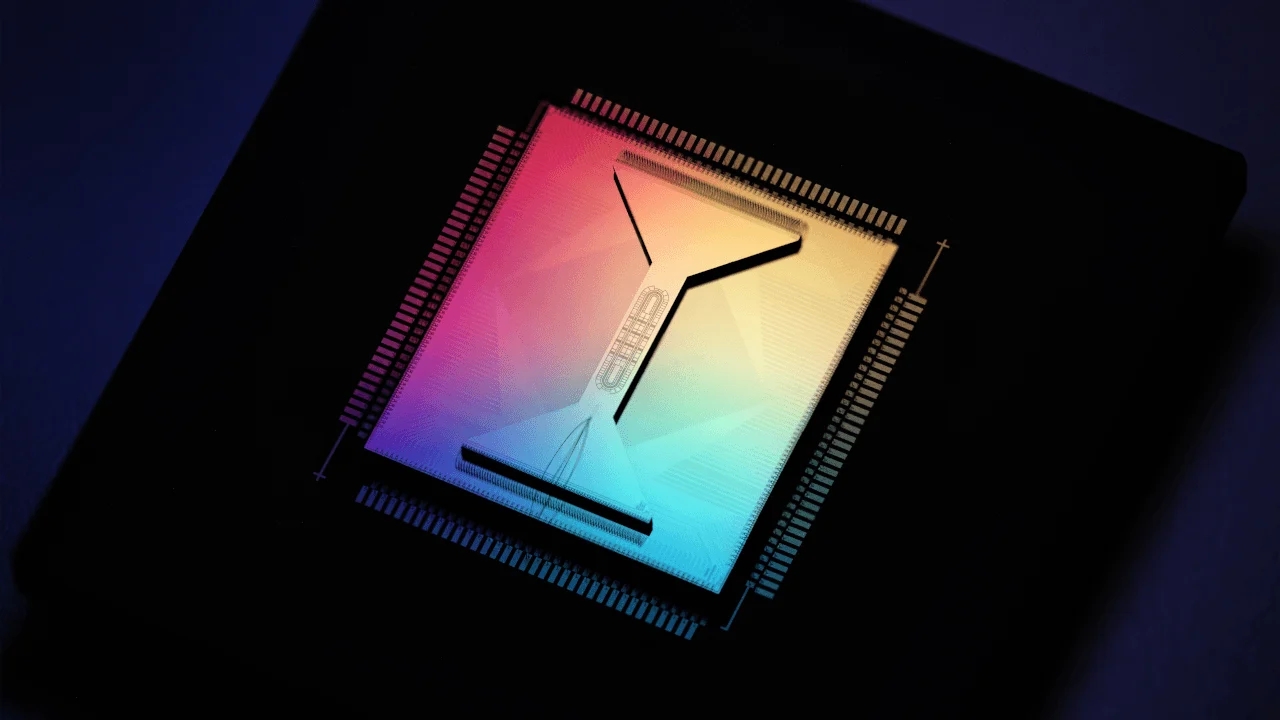
Quantinuum says its Helios quantum computer has achieved a record 99.9995% logical fidelity, strengthening the company’s ambition to develop a commercially viable, fault-tolerant quantum computer by 2029.
The company said on Monday that Helios recorded only five errors per million operations – a tenfold improvement on its previous best result, announced in September. Quantinuum also said the performance was 100 times better than the leading published result from competing quantum hardware architectures, previously reported by Google Quantum AI.
The advance comes as researchers and cryptocurrency companies assess the long-term risk posed by increasingly powerful quantum computers to the cryptography that protects bitcoin and other digital currencies.
Quantum systems are highly sensitive to errors in their qubits, the basic units of quantum information. They therefore require complex error-correction methods to carry out reliable calculations, unlike conventional computers.
Quantinuum’s latest result used a method called a “color code”, which groups several physical qubits together to create more dependable logical qubits. Researchers found that errors fell exponentially as they increased the level of protection, with each tested increase cutting the remaining logical errors by a factor of 12.
The work follows Quantinuum’s September result, which used a different error-correction technique on the same Helios hardware.
“We’ve crossed the threshold necessary for exponential improvements in accuracy, reinforcing our path to Apollo and how we can help users unlock commercial value from quantum at scale,” said Quantinuum chief executive Rajeeb Hazra.
The company said the new performance was within the target range for Apollo, its planned universal fault-tolerant quantum computer, which is expected by 2029.
Robin Blume-Kohout, co-director of Sandia National Laboratories’ Quantum Performance Lab, was not involved in the research but described the result as a significant milestone. He said it indicated that a larger system might achieve useful fault-tolerant computing with fewer than one million physical qubits.
However, the findings relate to a particular error-correction benchmark and do not show that a large-scale, general-purpose quantum computer has been built. Major engineering problems remain before such machines can reliably run complex algorithms.
The announcement follows a separate breakthrough by Google Quantum AI last week. Its researchers demonstrated “magic state cultivation”, a technique that reduced errors by a factor of 40 and achieved 99.99% logical fidelity while producing specialised quantum states required for some advanced calculations.
That progress has renewed debate about “Q-Day” – the hypothetical point at which quantum computers could break widely used cryptographic systems. Google researchers estimated earlier this year that attacking the elliptic-curve cryptography used in Bitcoin’s digital signatures might require fewer than 500,000 physical qubits, around 20 times fewer than some earlier estimates.
They also described a theoretical scenario in which an advanced quantum computer could derive a bitcoin private key from an exposed public key in about nine minutes. Researchers estimated that approximately 6.9 million BTC, nearly one-third of bitcoin’s maximum supply, could be vulnerable because the relevant public keys have already been exposed.
Quantinuum’s result cannot crack Bitcoin’s protections. But it has added urgency to preparations for a post-quantum system. Fidelity Digital Assets has warned about exposed public keys, while Coinbase has highlighted the difficulty of moving Bitcoin to quantum-resistant cryptography.
Possible safeguards include new digital signature systems, but they could require larger signatures, wallet upgrades and coordination across the decentralised network. Dormant bitcoin holdings may pose a particular problem if their owners cannot move them to quantum-resistant addresses.
No existing quantum computer can currently break Bitcoin’s cryptography. Yet with Quantinuum targeting 2029 for Apollo and Google advancing related technology, pressure to develop quantum-resistant cryptocurrency infrastructure is increasing.


