
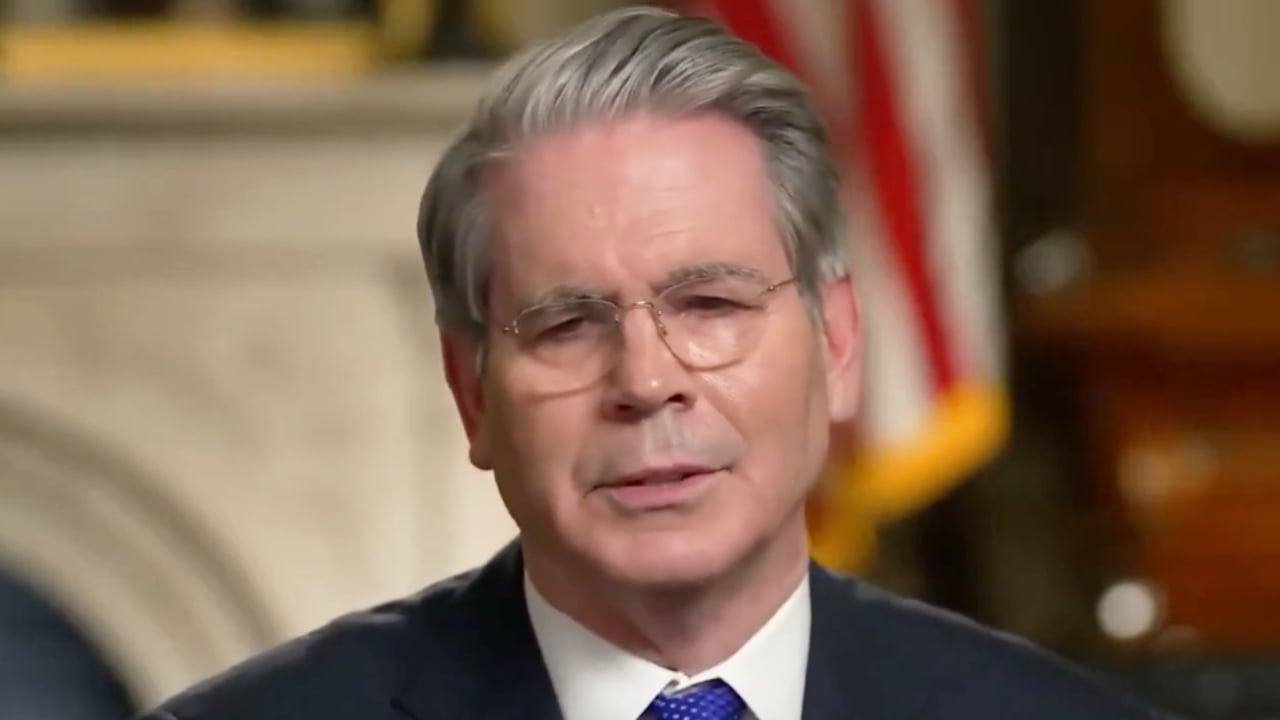
Treasury Secretary Scott Bessent has launched a forceful defence of the CLARITY Act, insisting the landmark crypto regulation bill would strengthen – not dilute – consumer and financial safeguards as he pressed the Senate to hold a vote without delay.
Bessent framed the legislation as a rare bipartisan achievement that has already cleared significant hurdles in Congress, warning that inaction would push a fast-growing digital asset industry overseas and erode US leadership in global finance.
He highlighted that the House of Representatives passed the bill more than a year ago and said lawmakers and staff from both parties have since poured “thousands of hours” into negotiations, while the Senate Banking and Agriculture committees have advanced their respective sections of the package.
According to Bessent, Senate Republicans have now assembled a version of the bill ready for a floor vote. He sharply criticised Democratic resistance to bringing the measure forward and accused some opponents of misrepresenting what the legislation would do.
Clash over consumer protection and money laundering
The Treasury secretary rejected accusations from Democratic senators that the CLARITY Act weakens consumer protection and anti-money laundering rules, arguing instead that the bill introduces “meaningful protections against fraud, consumer harm, and illicit finance”.
He said Titles II and III of the legislation would markedly toughen regulatory and compliance standards for digital asset intermediaries, placing them under obligations similar to those that already apply to traditional financial institutions.
Bessent also took aim at Democrats who have questioned the robustness of the proposal’s consumer protection framework. He noted that several of the lawmakers now criticising the bill have previously received millions of dollars in campaign backing from the crypto industry, while opposing the negotiated compromise now before the Senate.
On the broader economic stakes, the Treasury chief said Congress faces a clear choice between setting rules at home or watching innovation shift abroad. He questioned whether US lawmakers had ever before opted to effectively drive an emerging industry out of the country rather than regulate it, and argued that failure to pass the CLARITY Act would undercut American influence in a rapidly expanding global market.
Blockchain guidance and law enforcement backing
Bessent also defended the Blockchain Regulatory Certainty Act, which is folded into the wider package. He said it merely codifies long-standing Treasury policy that developers of noncustodial software do not fall under Bank Secrecy Act registration rules because they never take control of customer funds.
He argued that critics had overstated the impact of this provision and “mischaracterised” its intent, stressing that its scope is narrow and consistent with existing practice.
To bolster his case that law enforcement concerns have been addressed, Bessent pointed to the support of the Fraternal Order of Police. The organisation previously opposed parts of the bill but now backs the revised framework after negotiations, which he presented as evidence that safeguards against illicit finance have been strengthened.
Despite those changes, seven Democratic senators are still pushing for tougher measures on ethics, consumer protection, conflicts of interest, market integrity and illicit finance before they will support final passage.
Prospects in doubt as political clock ticks
The outlook for the bill remains uncertain. Research firm Galaxy Research recently cut its estimated probability of passage from 50% to 30%, reflecting the continued resistance in the Senate and the shrinking legislative calendar.
However, US Securities and Exchange Commission (SEC) chair Paul Atkins has voiced optimism that Congress will ultimately approve the legislation and has offered technical assistance to lawmakers as they refine the text.
Political pressure is mounting as the Senate’s schedule tightens ahead of the midterm elections. Advocacy group Stand With Crypto has pledged to “score every senator’s vote” on the CLARITY Act for its three million supporters, while polling suggests nearly 70% of US crypto owners factor digital asset policy into their voting decisions.
Bessent has used that backdrop to intensify his calls for action, portraying the decision over the bill as a test of US competitiveness in financial innovation. He has cast the debate as a pivotal moment for whether the United States will lead or lag in setting global standards for digital assets.
Lummis text sets out detailed regulatory blueprint
A key step in the process came on 22 July, when US Senator Cynthia Lummis (R-WY) released updated legislative text reflecting work from both the Senate Banking and Agriculture committees.
The 616-page proposal lays out new registration routes for digital asset firms, splits oversight responsibilities between the SEC and the Commodity Futures Trading Commission (CFTC), and introduces stronger protections for customer assets. It also expands disclosure requirements and tackles issues including self-custody, stablecoins, software developers and the handling of digital assets in bankruptcy.
On 14 May, after months of cross-party talks, the US Senate Committee on Banking, Housing, and Urban Affairs advanced the legislation by a bipartisan 15-9 vote, sending the CLARITY Act to the full Senate for consideration.
Bessent has repeatedly framed the bill as a defining choice for US economic strategy and innovation, invoking bitcoin creator Satoshi Nakamoto to underline his stance. “I believe Satoshi once said it best: ‘If you don’t believe me or don’t get it, I don’t have time to try to convince you, sorry.’”
The Senate now faces a narrowing window before its August recess to hold a vote on the CLARITY Act, with an unresolved ethics dispute adding further uncertainty to the timing and fate of the legislation.


