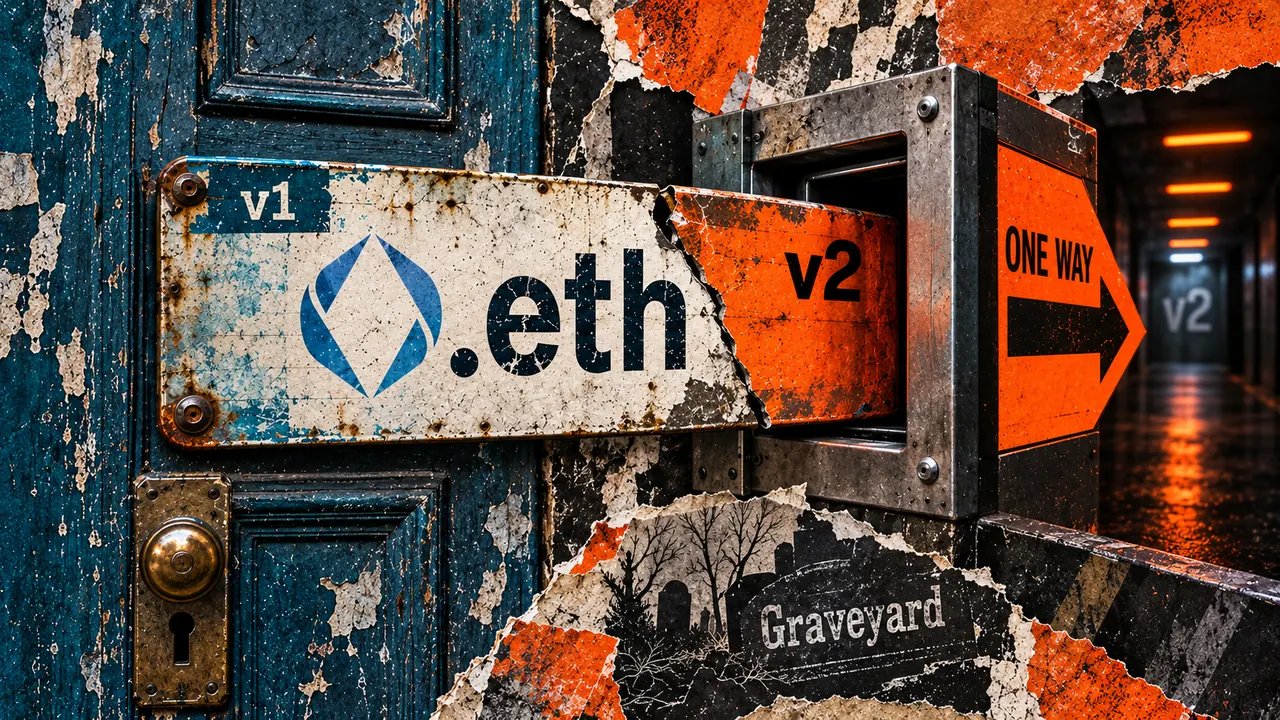
Ethereum Name Service has proposed activating ENSv2 without forcing existing .eth domain holders to move to the new system.
The proposal, published on 11 October, would allow users to keep their current names indefinitely provided they continue renewing them. Holders could also choose a permanent migration to ENSv2 to gain access to its upgraded features.
If approved, ENSv2 would become the system for all new .eth registrations, replacing the current registration infrastructure. Users who migrate would transfer control of their domains permanently. Their existing tokens would be moved into a smart contract called the Graveyard, which cannot return or transfer tokens once it has received them.
The proposal still requires approval from the Ethereum Name Service decentralised autonomous organisation (DAO). Its 12 October governance bulletin listed the vote as pending, and ENS has not announced a launch date.
New registry and revised fees
ENSv2 would replace the existing registry, introduced in 2017, with a hierarchical structure. Under the new model, individual domains could operate separate registries for their subdomains.
That would give owners greater control over permissions. Businesses and decentralised applications could, for example, assign responsibility for particular names or records without surrendering control of the wider domain.
Users who stay on ENSv1 would continue to access their domains and renew them through a dedicated contract. Their existing ENSv2 reservations would also be preserved.
The upgrade would change registration costs. Annual fees for names containing five or more characters would increase by 60%, from $5 to $8, according to ENS’s official guidance. Prices for three- and four-character names would remain unchanged.
Longer registrations would receive discounts, with users registering names for six years or more paying approximately 44% less each year. Payments for registrations and renewals would be made in stablecoins, including USDC and DAI, rather than ETH. Fees would therefore remain fixed in dollar terms.
Shorter grace period
Migrated names would have a 28-day grace period after expiry, replacing the current 90-day period. ENS would offset that reduction by extending registration expiry dates by 62 days, ensuring the original deadline is preserved before a name becomes available to another user.
Names that remain on ENSv1 would retain the 90-day grace period. Domains that had already been expired for longer than that period would not receive reservations in the new registry.
ENS expects to suspend new registrations temporarily while developers synchronise existing records and activate the replacement infrastructure. The process is expected to take several hours, but the proposal contains conflicting provisions about renewals during that period, leaving uncertainty over whether current holders will be able to renew their names before ENSv2 goes live.
Wallets and applications using ENS will also need to update their resolution systems. After approval, ENS Labs would complete the final synchronisation, activate ENSv2 registration and resolution, and transfer its remaining administrative powers to the DAO. The timing of those steps, as well as the rules for renewals during the transition, remains unresolved ahead of the vote.


