
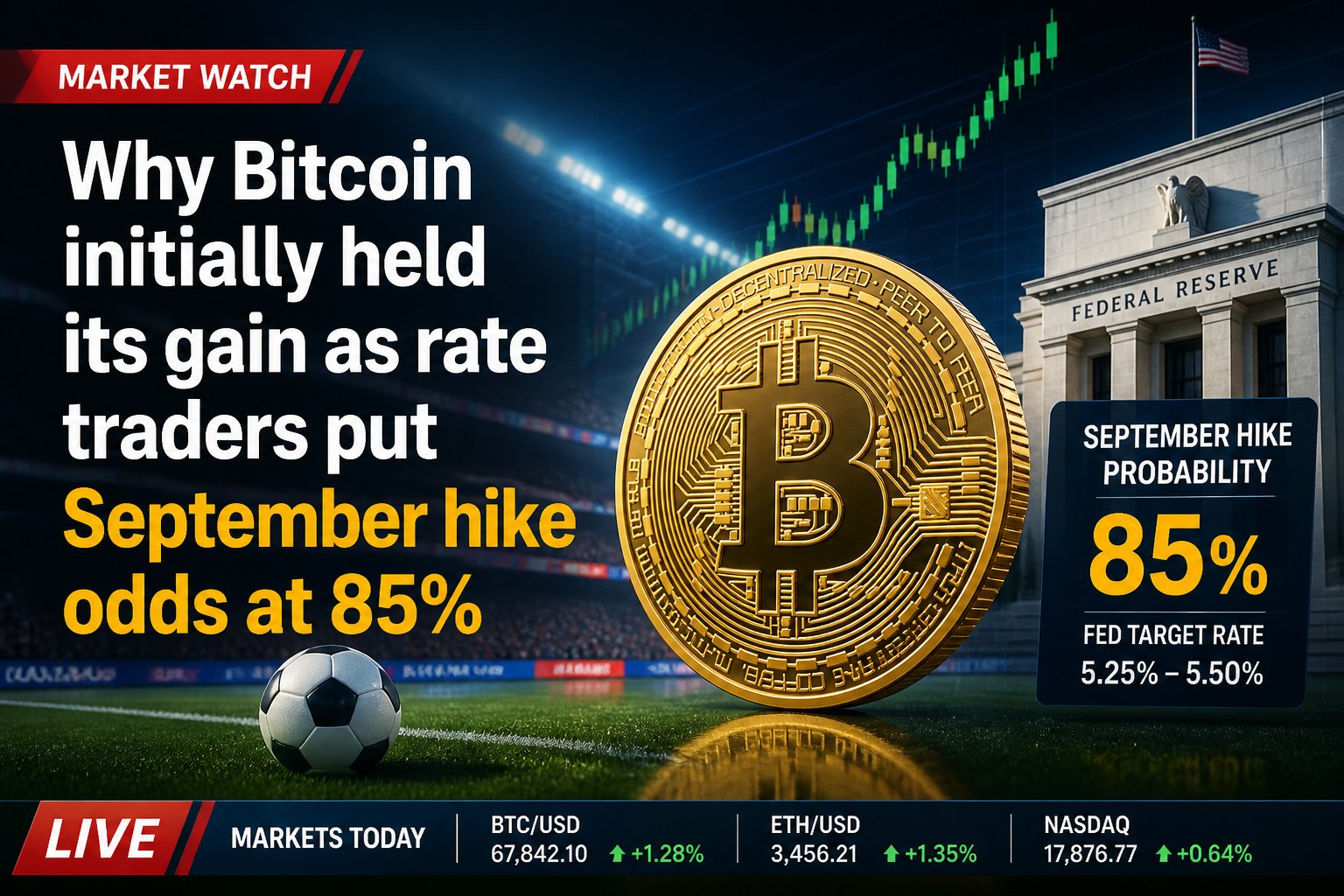
Bitcoin held on to its daily gain after a US inflation report increased expectations that the Federal Reserve could raise interest rates at its 15-16 September meeting.
BTC was trading at $78,683 when trading closed in the US for the week, up 2.08% over 24 hours, according to CryptoSlate’s live market data. Futures markets put the chance of a quarter-point increase at about 85%, up from roughly 70% before the inflation figures, Reuters reported. CME’s FedWatch probabilities are based on 30-Day Fed Funds futures.
The report gave policymakers mixed signals. Gasoline accounted for much of the increase in headline inflation, while the monthly measure of core inflation accelerated. Annual core inflation, however, eased.
Gasoline drives headline increase
The Bureau of Labor Statistics said the consumer price index rose 0.4% in August on a seasonally adjusted basis, following a 0.1% increase in July. The unadjusted 12-month rate remained at 3.4%.
Gasoline prices increased 3.9%, contributing more than one-third of the monthly rise in the all-items index. The wider energy index rose 2.1%.
That strong contribution from a volatile component could support the case for looking beyond the headline figure when assessing monetary policy. But the report was not solely an energy-driven event.
Core CPI, which excludes food and energy, increased 0.3% in August after rising 0.2% in July. Its annual rate fell to 2.4% from 2.5%, leaving policymakers with a divergence between improving yearly inflation and a faster monthly pace.
Shelter costs rose 0.3% in August, while services excluding energy services increased 3.0% over 12 months.
Federal Reserve Governor Christopher Waller had previously made the August inflation data central to his policy assessment. In a 3 September speech, he said continued progress towards the Fed’s 2% target would make him inclined to support keeping the policy rate unchanged.
He added that a hot report, or evidence that inflation progress had gone into reverse, could lead him to consider a rate increase at the 15-16 September meeting.
Waller described those remarks as a reaction function rather than a commitment, meaning they do not determine how he or the wider committee will vote. He also said core inflation helped separate underlying price pressure from energy volatility, adding that wider effects from earlier energy increases had not appeared so far.
However, he identified renewed energy pressure and a possible rise in longer-term inflation expectations as risks for the Fed to monitor. The August figures therefore met both parts of his test: annual core inflation moved closer to target, but the latest monthly reading worsened.
September energy pressures remain
Bitcoin’s 24-hour gain also requires caution. During Saturday trading, the cryptocurrency fell to about $77,500 amid thin weekend liquidity.
The August report cannot capture the sharper movement in oil prices that developed in September. That newer energy shock is not evidence within the August CPI figures, and it is too early to say it has spread into wider prices.
It could nevertheless affect future inflation data and expectations, two channels Waller identified as potential policy risks. August CPI offered some justification for looking through a gasoline-led rise, but faster monthly core inflation made the case for holding rates less straightforward.


