
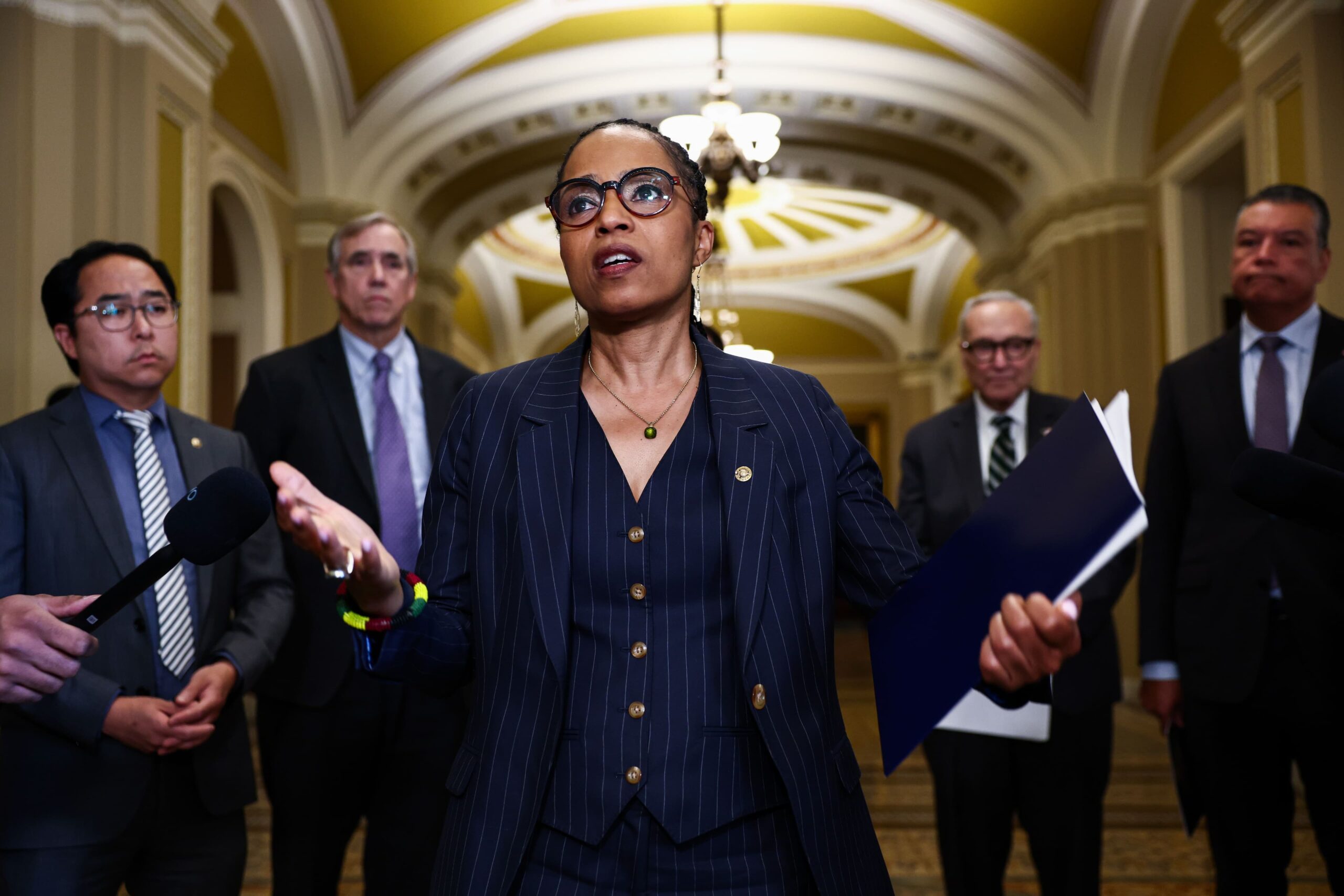
Key Democratic members of Congress have warned that the proposed crypto “Clarity Act” still fails to meet basic ethical and regulatory standards, dealing a setback to Republican efforts to push through a new US market structure for digital assets.
The legislation – touted by its backers as a defining framework for how cryptocurrencies are regulated in the United States – has come under criticism from several Democrats who had been seen as the most inclined to support it in a bipartisan vote.
They argue the latest draft, published by Republicans earlier on Wednesday, does not adequately address conflicts of interest, investor protections or the broader risks posed by the rapid growth of the crypto sector.
Democrats question bill’s ethics provisions
Democratic lawmakers reviewing the new text said the Clarity Act “falls short” on ethics and transparency requirements for both regulators and market participants.
Their concerns focus on whether the bill sufficiently prevents potential regulatory capture and self‐dealing by industry insiders, particularly in a market that has already seen a series of high‐profile failures and fraud cases.
Members of key committees examining the bill have indicated that, without clearer and tougher safeguards, they are unlikely to lend their support when the measure reaches the floor.
Several Democrats had previously signalled they were open to a compromise on digital asset rules, provided any legislation included strong protections against abuse and clear lines of authority for oversight agencies. The latest draft, they say, does not yet reach that bar.
Binance dominance heightens regulatory stakes
The political dispute comes as the global crypto market undergoes a reshuffle, with major players adjusting positions since June.
Despite the turbulence, Binance has maintained a commanding presence, holding around 55% of tracked user funds and roughly 24% of spot trading volume. While the wider market has suffered net outflows in early July, Binance has recorded net inflows, underscoring its continuing influence over global crypto liquidity.
That concentration is sharpening the debate in Washington over how robust any new US framework needs to be. Critics of the Clarity Act say the bill underestimates the systemic risks of having such a large share of user funds and trading activity funnelled through a single global platform.
Supporters, however, argue that providing regulatory certainty could help bring more of the crypto market within clearly defined US rules, potentially encouraging exchanges and other intermediaries to adopt higher standards.
Market structure at heart of policy clash
At issue is how the law would define different types of digital assets and allocate oversight between agencies such as the Securities and Exchange Commission and the Commodity Futures Trading Commission.
Republican drafters have presented the Clarity Act as a way to give businesses and investors predictable rules, in contrast to the current patchwork of enforcement actions and guidance.
Democratic sceptics counter that clarity without strong ethical safeguards could legitimise practices they see as risky, including lightly supervised trading venues and complex token structures that may obscure who ultimately holds responsibility for investor funds.
With major exchanges like Binance continuing to attract capital even as parts of the market retreat, the outcome of the Clarity Act debate is likely to shape how much of that activity is drawn into the US regulatory orbit – and on whose terms.
The latest pushback from Democrats suggests that negotiations over the bill’s core provisions, particularly those governing ethics and conflicts of interest, will need to intensify if Republicans hope to secure enough cross‐party backing to move the legislation forward.


