
Institutional investors increasingly view bitcoin as a store of value alongside gold, but most still place their crypto holdings in technology, innovation or venture portfolios, according to a Bitwise Asset Management survey.
The research, conducted between late March and April 2026 while bitcoin was trading at around $75,000, covered 15 large institutions. They included endowments, foundations, public pension funds, sovereign wealth funds, multi-family offices, investment consultants and public companies managing assets ranging from hundreds of millions to tens of billions of dollars.
Most respondents that held crypto described bitcoin as “a store of value with asymmetric upside, often paired with gold as a fiat debasement hedge”. Bitwise did not say how many respondents were included in the term “most”, or how regularly bitcoin was paired with gold.
“For most institutions we interviewed, bitcoin and gold now travel together. Especially for those concerned about fiat debasement, bitcoin is a central part of the equation,” said the report, co-authored by Bitwise Chief Investment Officer Matt Hougan and Head of Research Ryan Rasmussen.
One unnamed institution said it placed bitcoin in its portfolio’s “gold bucket”. However, the wider findings showed that crypto assets were generally held within venture, innovation and technology allocations.
A foundation whose crypto position had at times exceeded 10% of its portfolio described crypto as “a growth and disruption bet”. One pension fund included it in a broader innovation allocation covering AI, life sciences, space and other emerging technologies.
A sovereign wealth fund, meanwhile, viewed its crypto allocation as a multi-year bet on achieving global recognition, rather than an attempt to secure near-term returns.
Another foundation rejected the “digital gold” description altogether, classifying all crypto as disruptive technology rather than a store of value. An endowment offered a similarly mixed assessment, describing bitcoin both as an “emerging-to-established store-of-value” investment and “a venture-style bet”.
The report said bitcoin’s changing identity as both an asset and a technology had helped make it “the universal conviction asset”. Ether and solana had not achieved the same standing among the institutions surveyed. Every institution that held crypto also owned bitcoin, while most held BTC as a standalone position.
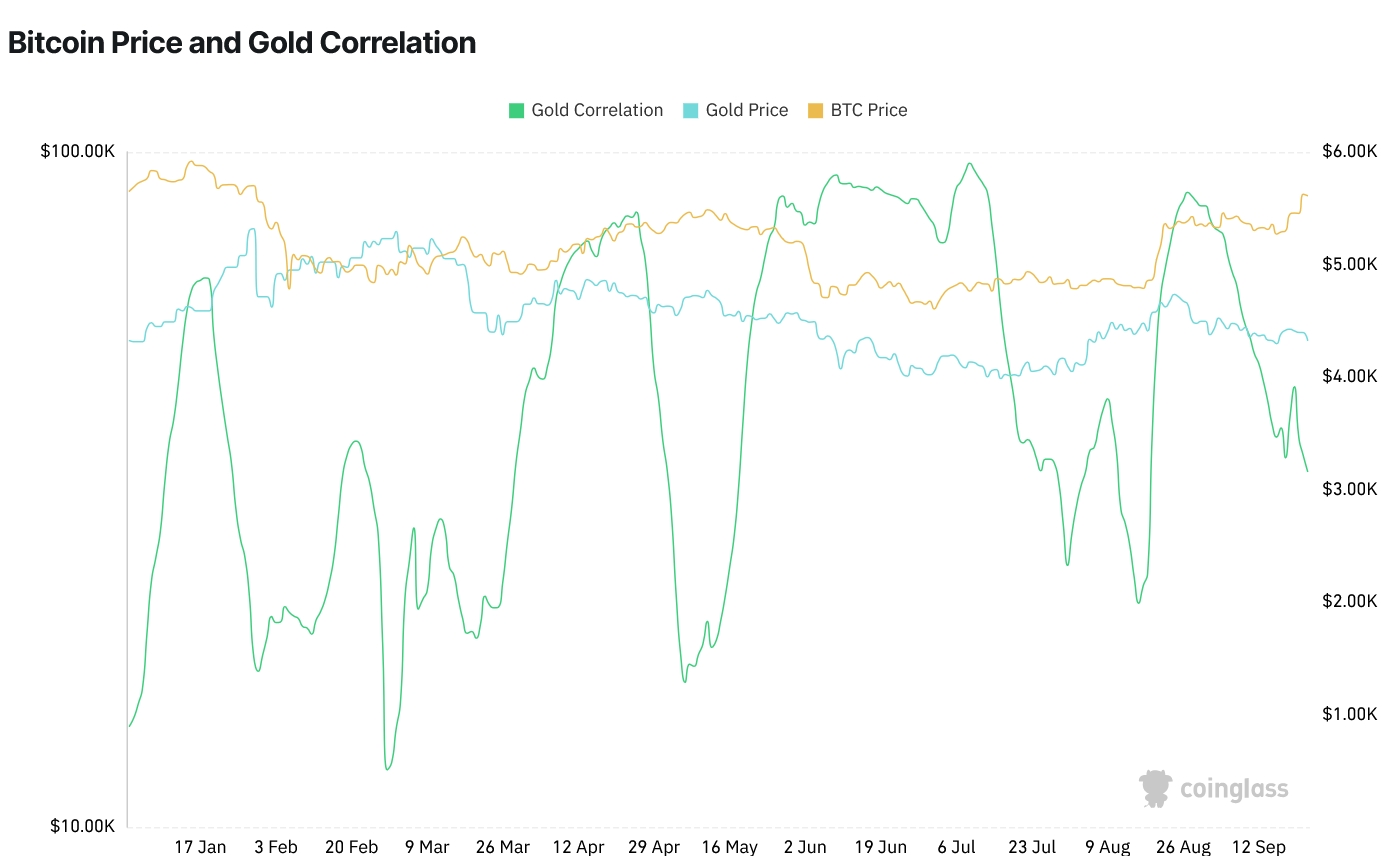
Crypto allocations ranged from 0.5% to 13% of investable assets, with most institutions allocating between 1% and 2%. CoinGlass data showed that the correlation between BTC and gold had been volatile during 2026.
Bitwise said decision-making structures could help explain the differing approaches. “Where one person can decide, crypto gets allocated. Where a committee must agree, it often stalls,” the firm wrote.
Despite the uncertainty, bitcoin and the wider crypto sector are becoming more established in conservative institutional portfolios. Kazakhstan’s central bank announced in March 2026 that it planned to use gold and foreign exchange reserves to invest up to $350 million in crypto asset proxies for diversification.
The surveyed institutions did not cut their crypto allocations during the market sell-off from October 2025 to April 2026, and several increased them. However, Harvard University and other large institutional investors reduced bitcoin exposure during that period, while banks, governments, private equity firms, family offices and insurers increased allocations, according to CoinShares data.
None of the institutions said price alone would prompt an exit. Bitcoin-only investors would reconsider if ether or solana demonstrated clear value accrual, while ETH and SOL holders cited a lack of real utility. Sovereign investors also pointed to regulatory reversal or an industry-wide credibility crisis. Capital rotation into AI-related assets has also been cited as a reason for bitcoin’s bear market.


