
The American Reserve Modernization Act has cleared the US House Financial Services Committee, bringing legislation to codify the Strategic Bitcoin Reserve a step closer to becoming federal law.
The amended bill, approved by 28 votes to 21 on 16 September, would prevent the government from selling qualifying bitcoin for 20 years. It was advanced after the committee adopted a substitute amendment proposed by Representative Bryan Steil (R-WI).
The vote is a committee-stage approval, not passage by the full House. H.R. 8957 must still be considered by the House, approved by the Senate and signed by President Donald Trump before it can become law.
Under the original proposal, each later deposit of bitcoin would have started its own 20-year holding period. The committee’s version instead creates one 20-year period beginning on the date the legislation is enacted.
The bill was introduced in May by Representatives Nick Begich (R-AK) and Jared Golden (D-ME). It would give Treasury 180 days after enactment to establish the Strategic Bitcoin Reserve and a separate Digital Asset Stockpile.
Bitcoin legally owned by the federal government, and not required by law for another purpose, would be covered. During the 20-year period, reserve bitcoin could not be sold, exchanged, auctioned, used as collateral or otherwise disposed of.
Two years before the holding period ends, Treasury would have to recommend to Congress whether the assets should remain in government hands or be released in a controlled way. After the period, Treasury could propose selling up to 10% of the reserve during any two-year period.
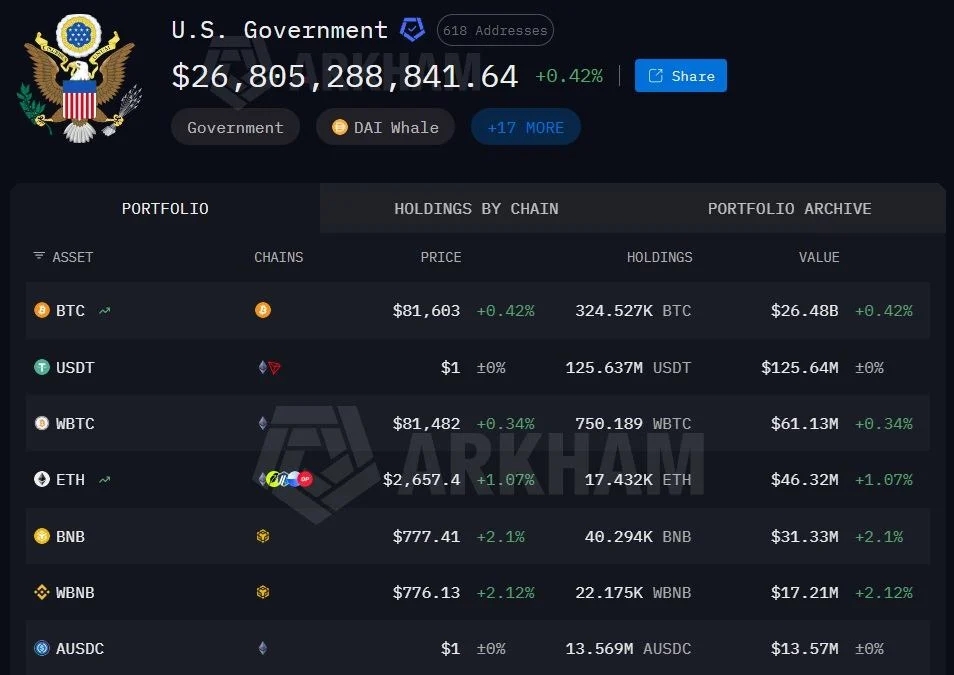
The legislation could apply to a significant amount of cryptocurrency accumulated largely through law enforcement actions. Onchain data has attributed about 324,527 BTC to addresses linked to the US government, although seized assets and assets that have been finally forfeited do not have the same legal status.
The proposal treats bitcoin as a long-term reserve asset rather than cryptocurrency intended for routine disposal. Its fixed supply has led to comparisons with gold as a possible store of value, although bitcoin remains considerably more volatile.
President Trump’s Executive Order 14233 already directs the federal government to operate both the Strategic Bitcoin Reserve and the Digital Asset Stockpile. Issued in 2025, it relies on existing executive and forfeiture powers, instructs the government not to sell bitcoin placed in the reserve and allows qualifying forfeited non-bitcoin assets to remain in the stockpile.
If H.R. 8957 does not pass, those assets could still be held under the executive order and existing law. However, a future president could amend or revoke the order, subject to other laws concerning forfeited property.
Legislation would provide greater durability because a future president could not remove its requirements through another executive order. Congress could still amend or repeal it, while a court could strike down provisions found to be unconstitutional.
The amended bill also requires agencies to give Treasury an inventory of their digital assets within 60 days and every year thereafter. Qualifying assets would then be transferred within 30 days of the reserve and stockpile being created.
Treasury would publish annual proof-of-reserve reports covering holdings, transactions and control of private keys. An independent cryptographic-attestation auditor would verify them, with continuing oversight from the comptroller general. The amendment replaces the introduced bill’s quarterly reporting requirement with annual reports.
Treasury and Commerce would also study budget-neutral ways to acquire more bitcoin, including asset sales, forfeitures, settlements and co-operative programmes. The provision does not authorise purchases, borrowing, new taxation, deficit spending or the use of US assets as collateral. A report would be due to Congress within 180 days of enactment.


