
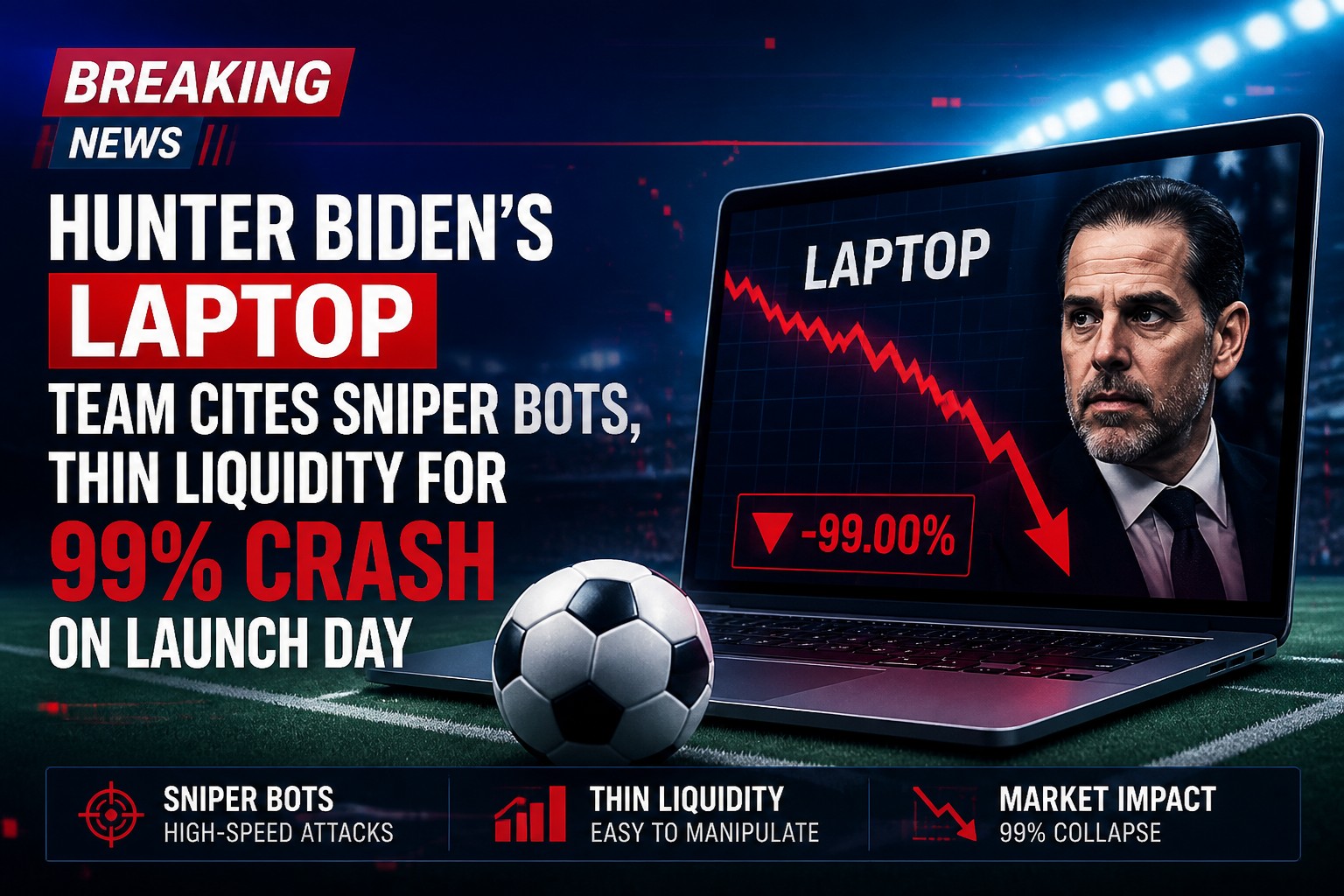
The LAPTOP project has blamed “sniper bots” and limited liquidity for a 99% crash on the token’s launch day, after the digital asset suffered a dramatic collapse almost immediately after trading began.
The project, described in the original report as Hunter Biden’s LAPTOP team, said it was responding to the sharp fall by planning further incentives for its liquidity pool. It also expects early prediction-market burns to reduce the token’s supply.
No further details were provided about the scale or timing of those measures, but the project’s explanation places the collapse on two factors: automated trading activity at launch and a lack of liquidity in the market.
The reference to sniper bots suggests the team believes automated traders moved quickly to buy or sell the token as soon as it became available. The project also cited “thin liquidity”, meaning that relatively limited trading depth amplified the effect of transactions and contributed to the 99% decline.
The fall took place on the launch day of the LAPTOP project. The report does not specify the token’s opening price, its lowest point, the venues on which it traded or the volume exchanged during the collapse.
In response, the project said it would add incentives to its liquidity pool. Those incentives are intended to support the market around the token, although the report does not give details of their value, structure or implementation.
The team also referred to early prediction-market burns as a way of cutting supply. A burn generally involves permanently removing tokens from circulation, but the report does not state how many tokens are expected to be destroyed, when the burns will take place or how they will be funded.
The project’s comments indicate that it expects changes to both liquidity and supply to affect the token’s market conditions after the launch-day crash. However, there was no indication in the source report that the price had recovered, nor was there any forecast for its future performance.
The 99% collapse is the central event described by the project, while the proposed pool incentives and prediction-market burns are presented as its early response. The team has not, according to the report, provided a fuller account of the launch or identified the specific activity it attributes to sniper bots.
The LAPTOP project’s statement therefore leaves several aspects of the episode unresolved, including the exact sequence of trading, the amount of liquidity available at launch and the intended timetable for the planned measures. Its immediate explanation remains that automated trading and limited liquidity were responsible for the scale of the decline.


